Beyond the Upgrade: What to Consider Before Migrating to STARLIMS v12.x

Planning a STARLIMS v12.x upgrade? Explore customization, integration, validation, and workflow considerations to modernize your LIMS with purpose.
October 29, 2026
TL;DR: Modernizing a legacy LIMS via the STARLIMS Technology Platform v12.x requires evaluating accumulated customizations, retiring technical debt, and leveraging HTML5 alongside architectural code layering to isolate custom workflows from core software updates. Successful migration hinges on integrating early risk-based Computer System Validation (CSV) with cross-functional governance to reduce total cost of ownership and ensure long-term operational sustainability.

For laboratories operating on legacy Laboratory Information Management Systems (LIMS), the upgrade process is rarely as simple as installing a newer version of the software. Years of customizations, evolving business requirements, instrument integrations, and established workflows can transform what appears to be a straightforward technology upgrade into a complex undertaking.

With the introduction of the STARLIMS Technology Platform v12.x releases, laboratories have opportunities to modernize their LIMS environments through expanded HTML5 functionality, improved system interfacing, and architectural enhancements designed to support long-term maintainability.

However, successful modernization requires more than adopting new technology. It requires a thoughtful evaluation of what currently exists, what still provides value, and what should change.

A LIMS upgrade should be viewed not simply as a technical necessity, but as an opportunity to improve the way a laboratory operates.

Understanding the Value of STARLIMS v12.x

The STARLIMS v12.x Technology Platform supports the modernization of laboratory informatics environments. One notable development is the continued transition toward HTML5-based functionality. By modernizing user interfaces and reducing dependencies on certain legacy components, STARLIMS provides opportunities for improved usability, compatibility, and system maintainability.

Enhancements across these releases also include system interfacing, printing capabilities—including server-side printing and client-side Zebra label printing for HTML5—and security improvements. Although these capabilities offer meaningful advantages, their actual value depends on how they are implemented within an organization's STARLIMS environment.

Evaluate Before You Migrate: The Hidden Complexity of Legacy Systems

One of the most important steps in preparing for a LIMS upgrade is understanding the current system. Over time, laboratory systems may accumulate customizations developed to address specific business requirements, regulatory expectations, or operational challenges. Some remain essential. Others may have been implemented to accommodate limitations that no longer exist.

{{cta:lims-upgrades-ask-the-experts}}

Before migrating to a newer STARLIMS platform, organizations should conduct a comprehensive assessment of their existing environment. This assessment should examine the following:

  • Customizations: Which customizations remain necessary, and which could be replaced by standard product functionality?
  • Business processes: Do existing workflows accurately reflect how the laboratory operates today?
  • Integrations: How will instrument interfaces, external applications, and data exchanges be affected?
  • Data and reporting: Are existing data structures, reports, and master data still appropriate?
  • User requirements: Have business needs changed since the original implementation?
  • Regulatory requirements: What impact will the upgrade have on the system's validated state and associated documentation?

This evaluation provides an opportunity to identify inefficiencies and technical debt that may have accumulated over the system's lifetime.

Code Layering: A More Sustainable Approach to STARLIMS Customization

Customization is often necessary to support specialized laboratory processes. However, extensive modifications to a vendor's core product can introduce long-term maintenance challenges.

When customizations are tightly coupled with standard product functionality, upgrades may require significant effort to identify conflicts, modify code, and perform regression testing. STARLIMS code layering offers an architectural approach intended to help manage this challenge by separating supported customizations from the underlying product layer.

This separation can provide advantages, including improved maintainability and reduced effort when evaluating future upgrades. However, code layering should not be viewed as a solution to every customization challenge.

Organizations must still understand the purpose, dependencies, and business value of their customizations. Existing code may require evaluation or refactoring, and compatibility with newer product functionality must be assessed. A well-designed LIMS should balance the flexibility required to support laboratory operations with the maintainability needed to support future growth.

Validation Considerations: STARLIMS Modernization Does Not Eliminate Compliance Responsibilities

For laboratories operating in regulated environments, validation is often one of the most resource-intensive aspects of a LIMS upgrade. Changes to system architecture, user interfaces, integrations, and customized functionality can affect existing validation documentation and test coverage.

Although modern architecture may simplify certain aspects of system maintenance, it does not eliminate the need to assess and document the impact of system changes. A risk-based validation strategy should begin early in the upgrade planning process so that everything is captured, assigned the appropriate level of risk, and tested accordingly.

Organizations should consider the following:

  • Performing a documented impact assessment to identify affected functionality and associated risks.
  • Reviewing existing user requirements and functional specifications for continued applicability.
  • Evaluating changes to customizations, integrations, and critical business processes.
  • Establishing an appropriate regression testing strategy based on the scope and risk of the changes.
  • Updating traceability matrices and supporting validation documentation as necessary.
  • Confirming that critical functionality continues to operate as intended before production release.

Treating validation as an activity that begins after the technical upgrade is complete is a common mistake. Early collaboration around validation among laboratory stakeholders, IT, quality assurance, and implementation teams can help identify risks, establish appropriate testing expectations, and reduce unnecessary rework.

The Importance of Requirements and Process Optimization

An upgrade is also an opportunity to determine whether older requirements still reflect the laboratory’s current operations, rather than assuming that every existing workflow should be carried forward. For example, a laboratory may have developed a custom workflow to accommodate a limitation in an earlier version of the software. If newer standard functionality can now satisfy that requirement, maintaining the original customization may introduce unnecessary complexity. 

Reviewing such cases can reveal opportunities for process improvement without duplicating the broader pre-migration assessment. This is where business process analysis becomes particularly valuable. By evaluating current workflows and comparing them against available system functionality, organizations can identify opportunities to simplify processes for the laboratory’s current and future needs, reduce unnecessary customization, and improve operational efficiency.

Looking Beyond the Initial Upgrade Cost

When evaluating the financial impact of a LIMS upgrade, organizations often focus on immediate project costs, including licensing, technical resources, testing, validation, and training. However, the broader consideration is the system's total cost of ownership (TCO).

A heavily customized system may continue to require significant resources for maintenance, troubleshooting, regression testing, and future upgrades. Modernization initiatives that reduce unnecessary customization, improve architectural maintainability, and streamline workflows may help reduce these ongoing costs.

Organizations should therefore evaluate both the immediate costs of migration and the long-term operational implications of their upgrade decisions. A lower maintenance architecture may create savings over time, but those benefits should be evaluated against the actual scope of the migration, system dependencies, and ongoing support requirements.

Planning for a Successful STARLIMS Upgrade

Effective governance is essential to a successful STARLIMS modernization initiative. Establish clear decision-making responsibilities, an agreed-upon process for managing scope changes, and a plan for resolving competing priorities across laboratory, IT, and quality teams. Stakeholders should agree on ownership of requirements, approval of changes, testing decisions, and release readiness throughout the project.

Modernization is not solely an IT responsibility; it requires coordinated decisions across the organization. Laboratory personnel, quality teams, business process owners, and technical stakeholders all have a role in ensuring the upgraded system supports both operational requirements and compliance expectations.

How CSols Can Help

At CSols, our laboratory informatics consultants understand that LIMS upgrades involve more than technology. Of course, the LIMS capabilities are a primary concern, but often the laboratory infrastructure isn’t prepared to change from an on-premises deployment to a SaaS deployment, for example.

In other upgrade projects we have done, the starting point was a corporate merger, where sites from one organization are folded into another. The merged organizations may have different workflows and cultures. These need to be considered and blended thoughtfully during the upgrade. An upgrade can also present opportunities to audit all lab systems and gain efficiencies through integrations.

{{cta:the-connected-lab-a-comprehensive-guide}}

From assessing existing system functionality and evaluating business requirements to supporting implementation, testing, and validation activities, CSols helps laboratories approach modernization with a focus on operational needs and long-term sustainability.

Our experience in laboratory informatics, business process optimization, and computer system validation allows us to help organizations identify potential challenges, evaluate opportunities for improvement, and develop practical strategies for successful LIMS upgrades.

A Successful STARLIMS Upgrade Is Done With Purpose

The STARLIMS v12.x Technology Platform offers opportunities for laboratories to modernize their informatics environments and establish a foundation for future improvements. 

However, the greatest value of an upgrade may not come from the technology itself. It comes from the opportunity to reassess existing processes, eliminate unnecessary complexity, strengthen system maintainability, and ensure that the LIMS continues to support the evolving needs of the laboratory.

The goal should not simply be to move to the newest version of STARLIMS. It should be to emerge from the upgrade with a better system than the one you started with.


What do you need to make a STARLIMS upgrade a success? 
‍

Comments

Leave a reply. Your email address will not be published. Required fields are marked *
This site uses Akismet to reduce spam. Learn how your comment data is processed.
Thank you! Your submission has been received!
Oops! Something went wrong while submitting the form.

Beyond the Upgrade: What to Consider Before Migrating to STARLIMS v12.x

Planning a STARLIMS v12.x upgrade? Explore customization, integration, validation, and workflow considerations to modernize your LIMS with purpose.

Planning a STARLIMS v12.x upgrade? Explore customization, integration, validation, and workflow considerations to modernize your LIMS with purpose.

TL;DR: Modernizing a legacy LIMS via the STARLIMS Technology Platform v12.x requires evaluating accumulated customizations, retiring technical debt, and leveraging HTML5 alongside architectural code layering to isolate custom workflows from core software updates. Successful migration hinges on integrating early risk-based Computer System Validation (CSV) with cross-functional governance to reduce total cost of ownership and ensure long-term operational sustainability.

For laboratories operating on legacy Laboratory Information Management Systems (LIMS), the upgrade process is rarely as simple as installing a newer version of the software. Years of customizations, evolving business requirements, instrument integrations, and established workflows can transform what appears to be a straightforward technology upgrade into a complex undertaking.

With the introduction of the STARLIMS Technology Platform v12.x releases, laboratories have opportunities to modernize their LIMS environments through expanded HTML5 functionality, improved system interfacing, and architectural enhancements designed to support long-term maintainability.

However, successful modernization requires more than adopting new technology. It requires a thoughtful evaluation of what currently exists, what still provides value, and what should change.

A LIMS upgrade should be viewed not simply as a technical necessity, but as an opportunity to improve the way a laboratory operates.

Understanding the Value of STARLIMS v12.x

The STARLIMS v12.x Technology Platform supports the modernization of laboratory informatics environments. One notable development is the continued transition toward HTML5-based functionality. By modernizing user interfaces and reducing dependencies on certain legacy components, STARLIMS provides opportunities for improved usability, compatibility, and system maintainability.

Enhancements across these releases also include system interfacing, printing capabilities—including server-side printing and client-side Zebra label printing for HTML5—and security improvements. Although these capabilities offer meaningful advantages, their actual value depends on how they are implemented within an organization's STARLIMS environment.

Evaluate Before You Migrate: The Hidden Complexity of Legacy Systems

One of the most important steps in preparing for a LIMS upgrade is understanding the current system. Over time, laboratory systems may accumulate customizations developed to address specific business requirements, regulatory expectations, or operational challenges. Some remain essential. Others may have been implemented to accommodate limitations that no longer exist.

{{cta:lims-upgrades-ask-the-experts}}

Before migrating to a newer STARLIMS platform, organizations should conduct a comprehensive assessment of their existing environment. This assessment should examine the following:

  • Customizations: Which customizations remain necessary, and which could be replaced by standard product functionality?
  • Business processes: Do existing workflows accurately reflect how the laboratory operates today?
  • Integrations: How will instrument interfaces, external applications, and data exchanges be affected?
  • Data and reporting: Are existing data structures, reports, and master data still appropriate?
  • User requirements: Have business needs changed since the original implementation?
  • Regulatory requirements: What impact will the upgrade have on the system's validated state and associated documentation?

This evaluation provides an opportunity to identify inefficiencies and technical debt that may have accumulated over the system's lifetime.

Code Layering: A More Sustainable Approach to STARLIMS Customization

Customization is often necessary to support specialized laboratory processes. However, extensive modifications to a vendor's core product can introduce long-term maintenance challenges.

When customizations are tightly coupled with standard product functionality, upgrades may require significant effort to identify conflicts, modify code, and perform regression testing. STARLIMS code layering offers an architectural approach intended to help manage this challenge by separating supported customizations from the underlying product layer.

This separation can provide advantages, including improved maintainability and reduced effort when evaluating future upgrades. However, code layering should not be viewed as a solution to every customization challenge.

Organizations must still understand the purpose, dependencies, and business value of their customizations. Existing code may require evaluation or refactoring, and compatibility with newer product functionality must be assessed. A well-designed LIMS should balance the flexibility required to support laboratory operations with the maintainability needed to support future growth.

Validation Considerations: STARLIMS Modernization Does Not Eliminate Compliance Responsibilities

For laboratories operating in regulated environments, validation is often one of the most resource-intensive aspects of a LIMS upgrade. Changes to system architecture, user interfaces, integrations, and customized functionality can affect existing validation documentation and test coverage.

Although modern architecture may simplify certain aspects of system maintenance, it does not eliminate the need to assess and document the impact of system changes. A risk-based validation strategy should begin early in the upgrade planning process so that everything is captured, assigned the appropriate level of risk, and tested accordingly.

Organizations should consider the following:

  • Performing a documented impact assessment to identify affected functionality and associated risks.
  • Reviewing existing user requirements and functional specifications for continued applicability.
  • Evaluating changes to customizations, integrations, and critical business processes.
  • Establishing an appropriate regression testing strategy based on the scope and risk of the changes.
  • Updating traceability matrices and supporting validation documentation as necessary.
  • Confirming that critical functionality continues to operate as intended before production release.

Treating validation as an activity that begins after the technical upgrade is complete is a common mistake. Early collaboration around validation among laboratory stakeholders, IT, quality assurance, and implementation teams can help identify risks, establish appropriate testing expectations, and reduce unnecessary rework.

The Importance of Requirements and Process Optimization

An upgrade is also an opportunity to determine whether older requirements still reflect the laboratory’s current operations, rather than assuming that every existing workflow should be carried forward. For example, a laboratory may have developed a custom workflow to accommodate a limitation in an earlier version of the software. If newer standard functionality can now satisfy that requirement, maintaining the original customization may introduce unnecessary complexity. 

Reviewing such cases can reveal opportunities for process improvement without duplicating the broader pre-migration assessment. This is where business process analysis becomes particularly valuable. By evaluating current workflows and comparing them against available system functionality, organizations can identify opportunities to simplify processes for the laboratory’s current and future needs, reduce unnecessary customization, and improve operational efficiency.

Looking Beyond the Initial Upgrade Cost

When evaluating the financial impact of a LIMS upgrade, organizations often focus on immediate project costs, including licensing, technical resources, testing, validation, and training. However, the broader consideration is the system's total cost of ownership (TCO).

A heavily customized system may continue to require significant resources for maintenance, troubleshooting, regression testing, and future upgrades. Modernization initiatives that reduce unnecessary customization, improve architectural maintainability, and streamline workflows may help reduce these ongoing costs.

Organizations should therefore evaluate both the immediate costs of migration and the long-term operational implications of their upgrade decisions. A lower maintenance architecture may create savings over time, but those benefits should be evaluated against the actual scope of the migration, system dependencies, and ongoing support requirements.

Planning for a Successful STARLIMS Upgrade

Effective governance is essential to a successful STARLIMS modernization initiative. Establish clear decision-making responsibilities, an agreed-upon process for managing scope changes, and a plan for resolving competing priorities across laboratory, IT, and quality teams. Stakeholders should agree on ownership of requirements, approval of changes, testing decisions, and release readiness throughout the project.

Modernization is not solely an IT responsibility; it requires coordinated decisions across the organization. Laboratory personnel, quality teams, business process owners, and technical stakeholders all have a role in ensuring the upgraded system supports both operational requirements and compliance expectations.

How CSols Can Help

At CSols, our laboratory informatics consultants understand that LIMS upgrades involve more than technology. Of course, the LIMS capabilities are a primary concern, but often the laboratory infrastructure isn’t prepared to change from an on-premises deployment to a SaaS deployment, for example.

In other upgrade projects we have done, the starting point was a corporate merger, where sites from one organization are folded into another. The merged organizations may have different workflows and cultures. These need to be considered and blended thoughtfully during the upgrade. An upgrade can also present opportunities to audit all lab systems and gain efficiencies through integrations.

{{cta:the-connected-lab-a-comprehensive-guide}}

From assessing existing system functionality and evaluating business requirements to supporting implementation, testing, and validation activities, CSols helps laboratories approach modernization with a focus on operational needs and long-term sustainability.

Our experience in laboratory informatics, business process optimization, and computer system validation allows us to help organizations identify potential challenges, evaluate opportunities for improvement, and develop practical strategies for successful LIMS upgrades.

A Successful STARLIMS Upgrade Is Done With Purpose

The STARLIMS v12.x Technology Platform offers opportunities for laboratories to modernize their informatics environments and establish a foundation for future improvements. 

However, the greatest value of an upgrade may not come from the technology itself. It comes from the opportunity to reassess existing processes, eliminate unnecessary complexity, strengthen system maintainability, and ensure that the LIMS continues to support the evolving needs of the laboratory.

The goal should not simply be to move to the newest version of STARLIMS. It should be to emerge from the upgrade with a better system than the one you started with.


What do you need to make a STARLIMS upgrade a success? 
‍

Start Date
End Date
Event Location
Webinar

LIMS Upgrades: Ask The Experts

Beyond LIMS Selection: Designing the Modern Lab Informatics Ecosystem

LIMS Upgrades: Ask the Experts (Panel Discussion)

LIMS and Instrument Integration in the AI Era

Maya Test

Webinar SAP QM or LIMS, which is right for your lab?

White Paper

5 Ways Project Leadership Can Maximize Informatics System Adoption

4 STARLIMS Shortcuts That Will Change How You Work

Data Integrity Checklist for Lab Systems

How to Begin Making Lab Data FAIR

Strategies and Methods for Gathering Your Requirements During System Development

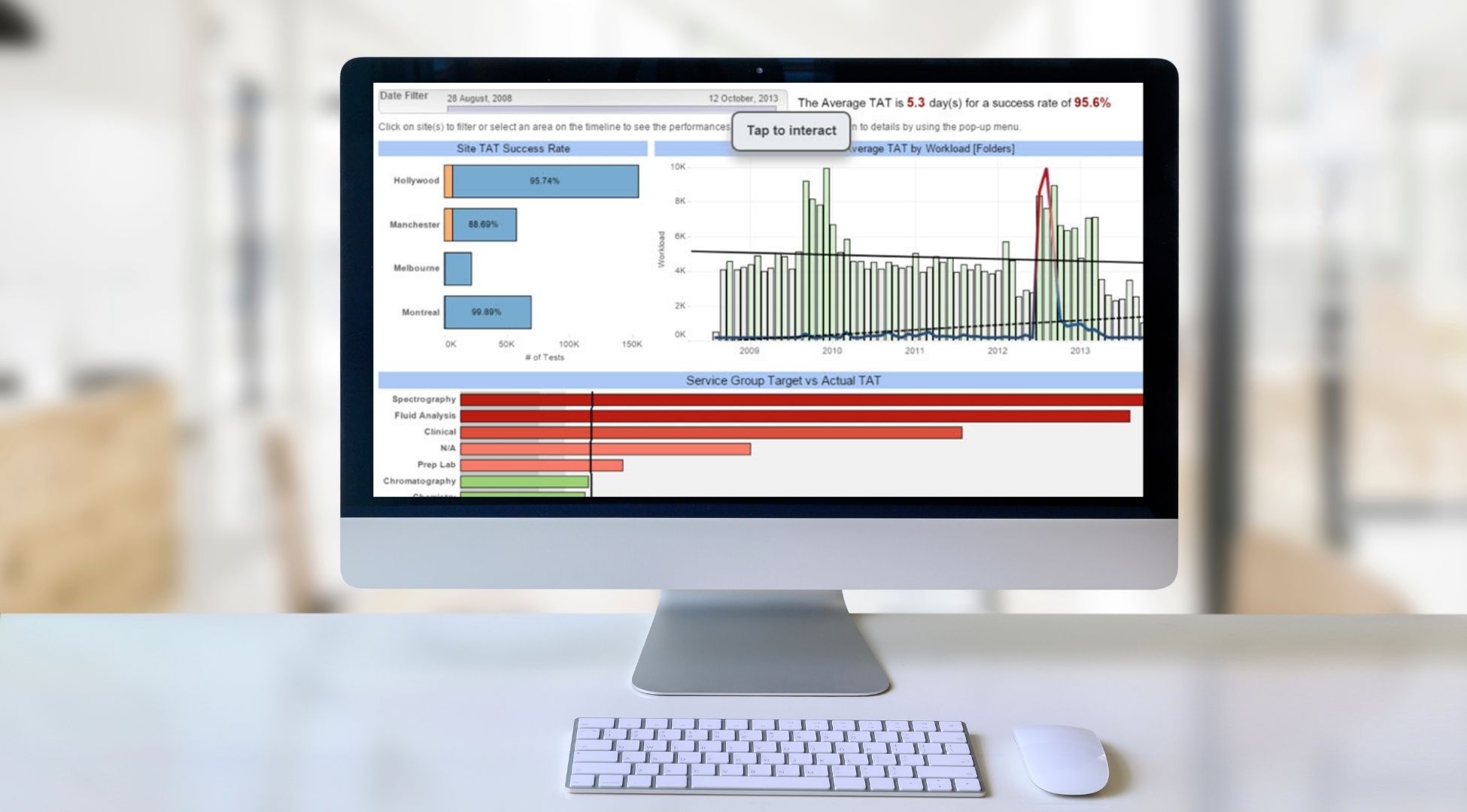
Data Visualization for STARLIMS: Advanced Analytics vs. Crystal Reports

A Lab Manager’s Guide to ROI from AI

This is the CTA title

This is a placeholder heading

5 Things You Can Improve During Instrument Qualifications

eBooks

The LIMS Comparison Guide / Navigating the LIMS Landscape

The Connected Lab: A Comprehensive Guide to Instrument Integration with Laboratory Informatics

Case Study

This is a case study title

Video
No items found.
Resource

Heading