

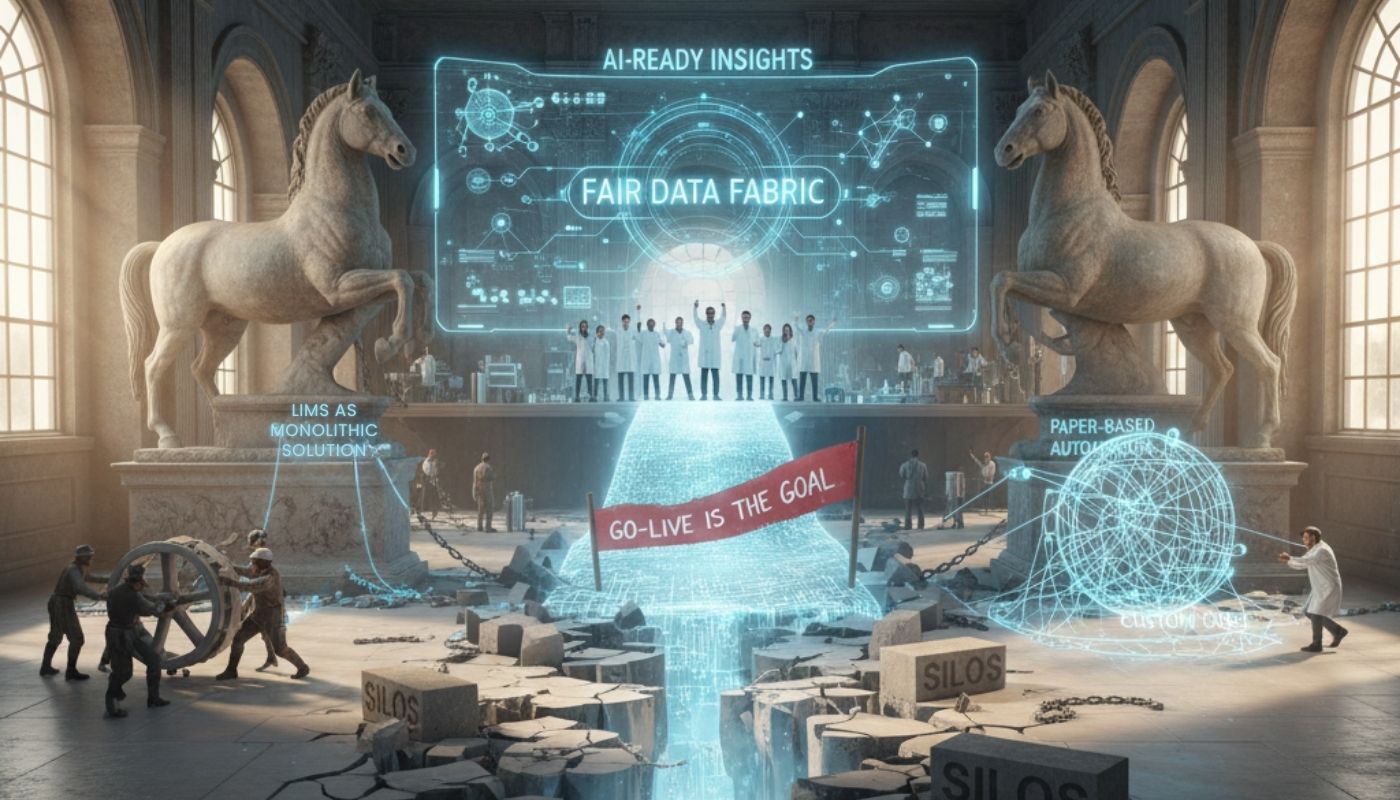
In 2015, 2017 (updated in 2025), and 2018 we wrote a series of blog posts about LIMS consulting myths. Some of these myths are persistent, causing misunderstandings for clients and consultancies alike. But at the close of the year (and the quarter century mark), it is time to let some of those myths die.
We are approaching a watershed moment in the lab informatics world. Laboratory informatics is moving out of the lab and shifting from process tracking to data asset creation and use. Your experimental data can’t live up to its full potential if it’s confined to the silo of the lab. Organizations are waking up to the value hidden in their data and are looking for better ways to bring it together for better business insights.
The rise of scientific data platforms represents a fundamental architectural shift in laboratory informatics. They are moving the core focus away from the application (LIMS, ELN, etc.) and onto the data itself. The LIMS is dead; long live the LIMS!
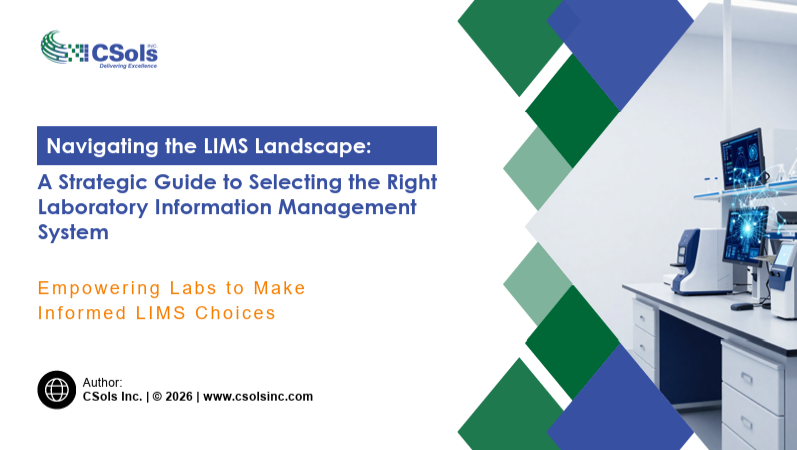
This blog post lists some of the LIMS consulting myths that we believe organizations shouldn’t carry with them into the next quarter century.
The Consultant Will Deliver a Monolithic LIMS Solution
LIMS consulting was originally developed as a service to help organizations manage structured data related to samples, testing, and routine QC workflows. A standalone LIMS now struggles with the volume and complexity of unstructured data (experimental observations, image files, complex graphs) and is often limited in its ability to support highly flexible, exploratory R&D workflows such as those found in preclinical drug discovery. LIMS consultants, likewise, must adapt to work with messier data.
To address these limitations, scientific data platforms and data foundries are built on the principle of unification. They natively integrate LIMS-like functions (sample tracking, resource management) with ELN-like functions (experiment documentation, scientific context) and Scientific Data Management System (SDMS) functions, creating an end-to-end, contextualized data fabric across the enterprise. Their continued adoption will transform the LIMS from the central data repository into a specialized transactional system that operates as part of a larger data ecosystem. For the consultant, this means the mandate is no longer to squeeze all lab functions into one application. Laboratory informatics consultants deliver high value by being the architecture authority—designing the full data ecosystem where the LIMS performs its best-in-class tracking and governance, while the scientific data platform handles data unification and contextualization.
The LIMS Consultant Is There to Digitize Paper and Automate Processes
Although automation is a benefit of LIMS implementation, a successful digital strategy today is about generating AI-ready data and enabling new scientific insights. Simply digitizing old paper processes doesn't prepare data for advanced analytics.
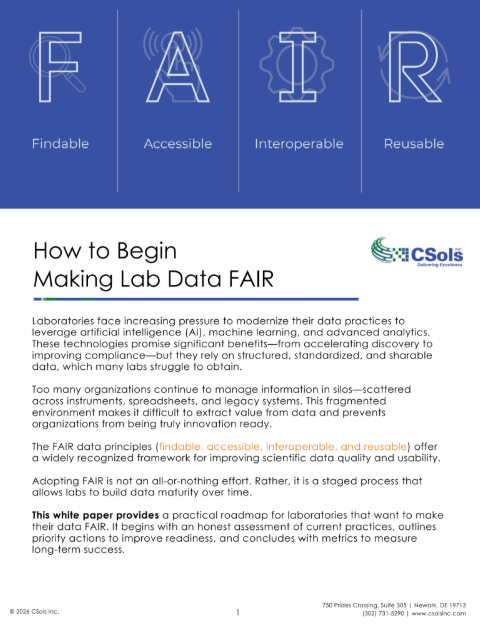
Modern data platforms prioritize data contextualization and making data findable, accessible, interoperable, and reusable (FAIR). The focus shifts from simple tracking and compliance to creating a robust, unified data asset for AI and machine learning initiatives. A consultant’s goal is no longer defined by the number of digitized paper forms but by how effectively the data asset is structured to enable new scientific insights and predictive analytics, which contribute to the client's discovery efforts.
A LIMS Consultant Builds and Maintains Point-to-Point Integrations
Traditionally, LIMS integration with ELNs, instruments, and ERP/MES systems was expensive, fragile, and required custom code. For example, traditional LIMS–ERP integration is often a brittle, scheduled batch file transfer. In a regulated business, each integration would have to be validated as it was built, adding another layer of complexity and cost.
Conversely, unifying platforms are designed with open APIs and modern cloud-native services for seamless, low-code integration. The platform ensures seamless data traceability across the entire product lifecycle from the R&D lab straight through to the manufacturing floor. The platform becomes the central workflow orchestrator, making the old model of bolting together siloed systems obsolete. Data platforms ensure interoperability, allowing organizations to select the best tool for each job without worrying about vendor lock-in. In this model, the LIMS becomes a spoke, rather than a hub, in the new data architecture. This relieves the consultant of the burden of writing fragile custom integration code and managing constant revalidation. LIMS consultants will become workflow orchestration strategists—leveraging the platform's central capabilities to ensure real-time, seamless data traceability across the entire product lifecycle.
The LIMS Consultant's Role Ends at the Application's Database Border
Many labs and IT departments still operate under the assumption that the LIMS vendor's database is the primary, immutable, long-term source of scientific data (especially approved results), and that data can only be accessed via the LIMS application or its reporting tools. This ties the data's utility to the application's lifespan.
The shift to scientific data platforms and cloud data lakes (e.g., in AWS, Azure) means that data ownership moves to the enterprise data lake. The scientific data platform ensures that data is immediately copied, harmonized, and available in a vendor-neutral format. The LIMS remains the system of record for transactions and compliance, but the data lake becomes the system of record for the scientific data asset. This ensures the scientific data asset's longevity and accessibility for all future analytic tools, well beyond the lifespan of the LIMS itself. The consultant's role expands from managing a local application to Enterprise Data Stewardship.
LIMS Consulting Can Safely Ignore Unstructured Data and Scientific Context
Although structured data about samples and tests are important, the most valuable information is the context—the why and how of the experiment, which is often unstructured data. The consultant's expertise must expand from mere process mapping to becoming an ontology and metadata architect.
Consulting now needs to emphasize defining the unified data model for the entire scientific process, including capturing the unstructured/contextual data that powers AI and advanced analytics. This includes establishing proper metadata standards, defining an appropriate ontology, and implementing FAIR data principles from day one.
Our Value Ends at Go-Live: The Myth of Project-Oriented LIMS Consulting
The go-live date is only the beginning. The long-term success hinges on user adoption, data quality, and the system's ability to evolve. Shifting the success metric from project milestones to business impact is the core of the evolution of lab informatics consulting into digital transformation.

In today’s world, lab informatics consulting must evolve into digital transformation consulting. Success is now measured by business and scientific outcomes, such as reduced assay development time, increased data reusability for AI, and a clear return on investment from improved scientific decision-making, not just a successful installation. Lab informatics consultants must master now to effect a digital transformation includes:
- A Focus Shift: From application-centric to data-centric expertise.
- Required Skills: Expertise in FAIR principles, data governance, ontology definition, and cloud architecture (AWS/Azure), alongside traditional LIMS process mapping.
- Deliverables: The primary deliverable is no longer a successful implementation, but the enterprise data model and the data governance framework that underpins the entire scientific data fabric.
What LIMS consulting myths are you going to let go of in 2026?



.jpg)
.png)
Comments