Blog
5
min read

The Risks of Skipping Key Validation Steps in the Lab

Small shortcuts can lead to a big error in validation & compliance—learn why your lab's long-term success depends on getting validation right early.
December 4, 2025
TL;DR: Skipping validation steps to save time is counterproductive, as lax procedures lead to costly rework, erode confidence, and introduce errors that compromise data quality and regulatory compliance. A careful, risk-based approach to validation, using guidance like Computer Software Assurance (CSA), is crucial for building trust in lab systems, ensuring successful audits, and setting a robust foundation for future changes and upgrades.

Skipping validation steps can feel like a timesaver, especially when schedules are tight or teams feel the crunch of deadlines. It might seem like skipping just one check is harmless, but lax procedures can add up fast. What starts as a shortcut often turns into days of rework—or worse, lets an error in validation and compliance creep into your production systems without anyone noticing. The impact goes further than just extra troubleshooting, reaching into the core of data quality and compliance that labs depend on every day.

When labs push too hard for speed and skip over proper validation, confidence erodes and simple tasks get tangled up in extra troubleshooting. These disruptions can ripple through every department, impacting data quality and making compliance much tougher. Let’s look at what really happens when validation steps are skipped—and why careful planning pays you back every time.

Why Validation Matters More Than You Think

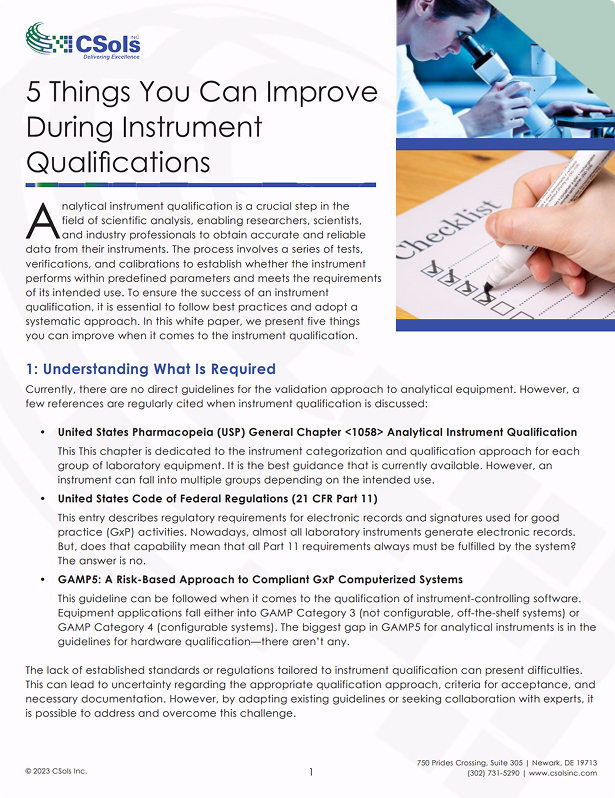
The U.S. Food and Drug Administration recently issued guidance around computer software assurance. This guidance had been in draft form for many years, so organizations have had ample time to become familiar with its risk-based approach. This has been CSols’ preferred validation method for the entirety of our existence. This new approach will allow organizations more flexibility to decide which of their processes require rigorous testing and which are lower risk and can be validated based on the vendor’s testing. That said, it remains important to follow validation procedures carefully to avoid unnecessary risks.

Validation is more than just another box to check. It’s the step that proves your lab’s systems and software work the way they are intended to and that you expect, especially in regulated fields where quality and traceability are required. When done well, it builds trust in results, keeps data clean, and makes audits much easier to get through.

Skipping any critical part of a validation can leave holes that undermine even the best lab practices. Without a comprehensive, risk-based validation plan, labs could let small issues slip by inadvertently. Maybe a workflow stops short, or a data field does not save the right value. When these issues go unchecked, they can turn into bigger problems—sometimes months after a go-live date.

A strong validation process doesn’t just solve problems today. It creates a guide for future changes. Teams know they can upgrade tech, add new equipment, or tweak workflows without sending everything into a tailspin. Future fixes feel less risky because the base you are building from has already been thoroughly tested.

Validation and compliance consulting from specialized teams can help labs build test plans and risk assessments, supporting full traceability and easier audits later. 
What Can Go Wrong When Validation Steps Are Missed 

Problems from skipped validation show up in ways that are not always easy to spot at first. The issues may start quietly—maybe a slow system report or occasional error message. Over time, the cracks widen. Soon, the system might not meet regulatory needs at all, stalling production or delaying sample releases.

When validation checks are missed, labs face more than slight setbacks:

  • Regulatory bodies may put a hold on operations until gaps are fixed
  • Users spend hours troubleshooting instead of producing results
  • Simple errors that could have been fixed early snowball into big, costly issues

If teams need to backtrack, fix missed steps, or rework project plans, it becomes much harder to deliver on tight deadlines. Instead of a clear path forward, labs wind up fighting to undo gaps that did not need to exist in the first place.

Implementation and validation experts who are well versed in a risk-based validation approach such as CSA can help your organization map all key steps and assign a risk value to them, so labs can be confident that no piece of the workflow is missed before launch. 

Understanding the Real Impact of an Error in Validation and Compliance 

A single error in validation and compliance is all it takes to put a lab’s reputation and workflow at risk. Out-of-spec results or missing records can mean major delays or even lost approvals during audits—costs that go well beyond fixing a broken automation.

When a critical piece of data is missed or skipped, the lab might lose evidence that every step was followed. Without a complete audit trail, it can be impossible to show regulators that the process meets industry rules. Fines, failed audits, or rejected batches are all possible outcomes—not due to bad intent, but just from gaps in early planning.

Trying to fix these after the fact is stressful and slow. Teams have to spend extra time figuring out where the error started, recreate lost data, and document every change as they make fixes. Morale drops, projects fall behind, and trust in the system suffers across the lab.

A robust validation and compliance process means every required record, approval, and test is checked and recorded, reducing the risk that any single issue will lead to a much larger problem down the road.
How to Build a Smarter Validation Process from Day One

A smarter approach to validation means treating it as a part of your main project, not a hurdle to clear at the end. That starts with building a validation plan that is rolled out step by step with system implementation. Every new tool or workflow gets checked using the same real-life scenarios staff will use after launch.

Pull in experts who understand both your technology and how your lab really works. They know which risks matter and can spot areas where validation is most likely to be overlooked. Their experience keeps documentation tight, meaningful, and ready for any inspection.

Reliable validation often means using templates and automated test tracking, so every required record gets captured without adding manual review after each change. Well-organized tracking keeps everyone on the same page and helps teams build habits that carry into everyday work.

Strategic consulting and data management support gives labs tried-and-true templates, automated tracking, and training tools for smart validation routines from setup to go-live.

Driving Long-term Confidence in Your Systems 

Treating validation as a core process—not an afterthought—sets labs up for long-term wins. When systems and records are built on a strong foundation, upgrades and new projects cause fewer bumps. Staff trust the tools they use, compliance moves smoothly, and support tickets drop off.

Clear validation steps make it much easier to adapt to change, whether you are upgrading software, facing stricter compliance rules, or welcoming new staff. The labs that commit to full validation early see big paybacks during audits, upgrades, and unexpected process changes. Invest the time to do it right, and you will spend less time fixing problems and more time focused on growing and improving your lab.

At CSols Inc., we understand that a robust validation and compliance process is crucial for maintaining your lab's efficiency and reliability. Our expertise in laboratory data management ensures that your system is not only robust but also adaptable to future changes. Invest in a strong foundation today and see how seamless validation can transform your daily operations and boost long-term success. Let us help you focus on growth by handling the complexities of thorough validation.


In what ways will computer software assurance make validation easier for your lab?  

Comments

Leave a reply. Your email address will not be published. Required fields are marked *
This site uses Akismet to reduce spam. Learn how your comment data is processed.
Thank you! Your submission has been received!
Oops! Something went wrong while submitting the form.

The Risks of Skipping Key Validation Steps in the Lab

Small shortcuts can lead to a big error in validation & compliance—learn why your lab's long-term success depends on getting validation right early.

Small shortcuts can lead to a big error in validation & compliance—learn why your lab's long-term success depends on getting validation right early.

TL;DR: Skipping validation steps to save time is counterproductive, as lax procedures lead to costly rework, erode confidence, and introduce errors that compromise data quality and regulatory compliance. A careful, risk-based approach to validation, using guidance like Computer Software Assurance (CSA), is crucial for building trust in lab systems, ensuring successful audits, and setting a robust foundation for future changes and upgrades.

Skipping validation steps can feel like a timesaver, especially when schedules are tight or teams feel the crunch of deadlines. It might seem like skipping just one check is harmless, but lax procedures can add up fast. What starts as a shortcut often turns into days of rework—or worse, lets an error in validation and compliance creep into your production systems without anyone noticing. The impact goes further than just extra troubleshooting, reaching into the core of data quality and compliance that labs depend on every day.

When labs push too hard for speed and skip over proper validation, confidence erodes and simple tasks get tangled up in extra troubleshooting. These disruptions can ripple through every department, impacting data quality and making compliance much tougher. Let’s look at what really happens when validation steps are skipped—and why careful planning pays you back every time.

Why Validation Matters More Than You Think

The U.S. Food and Drug Administration recently issued guidance around computer software assurance. This guidance had been in draft form for many years, so organizations have had ample time to become familiar with its risk-based approach. This has been CSols’ preferred validation method for the entirety of our existence. This new approach will allow organizations more flexibility to decide which of their processes require rigorous testing and which are lower risk and can be validated based on the vendor’s testing. That said, it remains important to follow validation procedures carefully to avoid unnecessary risks.

Validation is more than just another box to check. It’s the step that proves your lab’s systems and software work the way they are intended to and that you expect, especially in regulated fields where quality and traceability are required. When done well, it builds trust in results, keeps data clean, and makes audits much easier to get through.

Skipping any critical part of a validation can leave holes that undermine even the best lab practices. Without a comprehensive, risk-based validation plan, labs could let small issues slip by inadvertently. Maybe a workflow stops short, or a data field does not save the right value. When these issues go unchecked, they can turn into bigger problems—sometimes months after a go-live date.

A strong validation process doesn’t just solve problems today. It creates a guide for future changes. Teams know they can upgrade tech, add new equipment, or tweak workflows without sending everything into a tailspin. Future fixes feel less risky because the base you are building from has already been thoroughly tested.

Validation and compliance consulting from specialized teams can help labs build test plans and risk assessments, supporting full traceability and easier audits later. 

What Can Go Wrong When Validation Steps Are Missed 

Problems from skipped validation show up in ways that are not always easy to spot at first. The issues may start quietly—maybe a slow system report or occasional error message. Over time, the cracks widen. Soon, the system might not meet regulatory needs at all, stalling production or delaying sample releases.

When validation checks are missed, labs face more than slight setbacks:

  • Regulatory bodies may put a hold on operations until gaps are fixed
  • Users spend hours troubleshooting instead of producing results
  • Simple errors that could have been fixed early snowball into big, costly issues

If teams need to backtrack, fix missed steps, or rework project plans, it becomes much harder to deliver on tight deadlines. Instead of a clear path forward, labs wind up fighting to undo gaps that did not need to exist in the first place.

Implementation and validation experts who are well versed in a risk-based validation approach such as CSA can help your organization map all key steps and assign a risk value to them, so labs can be confident that no piece of the workflow is missed before launch. 

Understanding the Real Impact of an Error in Validation and Compliance 

A single error in validation and compliance is all it takes to put a lab’s reputation and workflow at risk. Out-of-spec results or missing records can mean major delays or even lost approvals during audits—costs that go well beyond fixing a broken automation.

When a critical piece of data is missed or skipped, the lab might lose evidence that every step was followed. Without a complete audit trail, it can be impossible to show regulators that the process meets industry rules. Fines, failed audits, or rejected batches are all possible outcomes—not due to bad intent, but just from gaps in early planning.

Trying to fix these after the fact is stressful and slow. Teams have to spend extra time figuring out where the error started, recreate lost data, and document every change as they make fixes. Morale drops, projects fall behind, and trust in the system suffers across the lab.

A robust validation and compliance process means every required record, approval, and test is checked and recorded, reducing the risk that any single issue will lead to a much larger problem down the road.

How to Build a Smarter Validation Process from Day One

A smarter approach to validation means treating it as a part of your main project, not a hurdle to clear at the end. That starts with building a validation plan that is rolled out step by step with system implementation. Every new tool or workflow gets checked using the same real-life scenarios staff will use after launch.

Pull in experts who understand both your technology and how your lab really works. They know which risks matter and can spot areas where validation is most likely to be overlooked. Their experience keeps documentation tight, meaningful, and ready for any inspection.

Reliable validation often means using templates and automated test tracking, so every required record gets captured without adding manual review after each change. Well-organized tracking keeps everyone on the same page and helps teams build habits that carry into everyday work.

Strategic consulting and data management support gives labs tried-and-true templates, automated tracking, and training tools for smart validation routines from setup to go-live.

Driving Long-term Confidence in Your Systems 

Treating validation as a core process—not an afterthought—sets labs up for long-term wins. When systems and records are built on a strong foundation, upgrades and new projects cause fewer bumps. Staff trust the tools they use, compliance moves smoothly, and support tickets drop off.

Clear validation steps make it much easier to adapt to change, whether you are upgrading software, facing stricter compliance rules, or welcoming new staff. The labs that commit to full validation early see big paybacks during audits, upgrades, and unexpected process changes. Invest the time to do it right, and you will spend less time fixing problems and more time focused on growing and improving your lab.

At CSols Inc., we understand that a robust validation and compliance process is crucial for maintaining your lab's efficiency and reliability. Our expertise in laboratory data management ensures that your system is not only robust but also adaptable to future changes. Invest in a strong foundation today and see how seamless validation can transform your daily operations and boost long-term success. Let us help you focus on growth by handling the complexities of thorough validation.


In what ways will computer software assurance make validation easier for your lab?  

Start Date
December 4, 2025
End Date
Event Location