

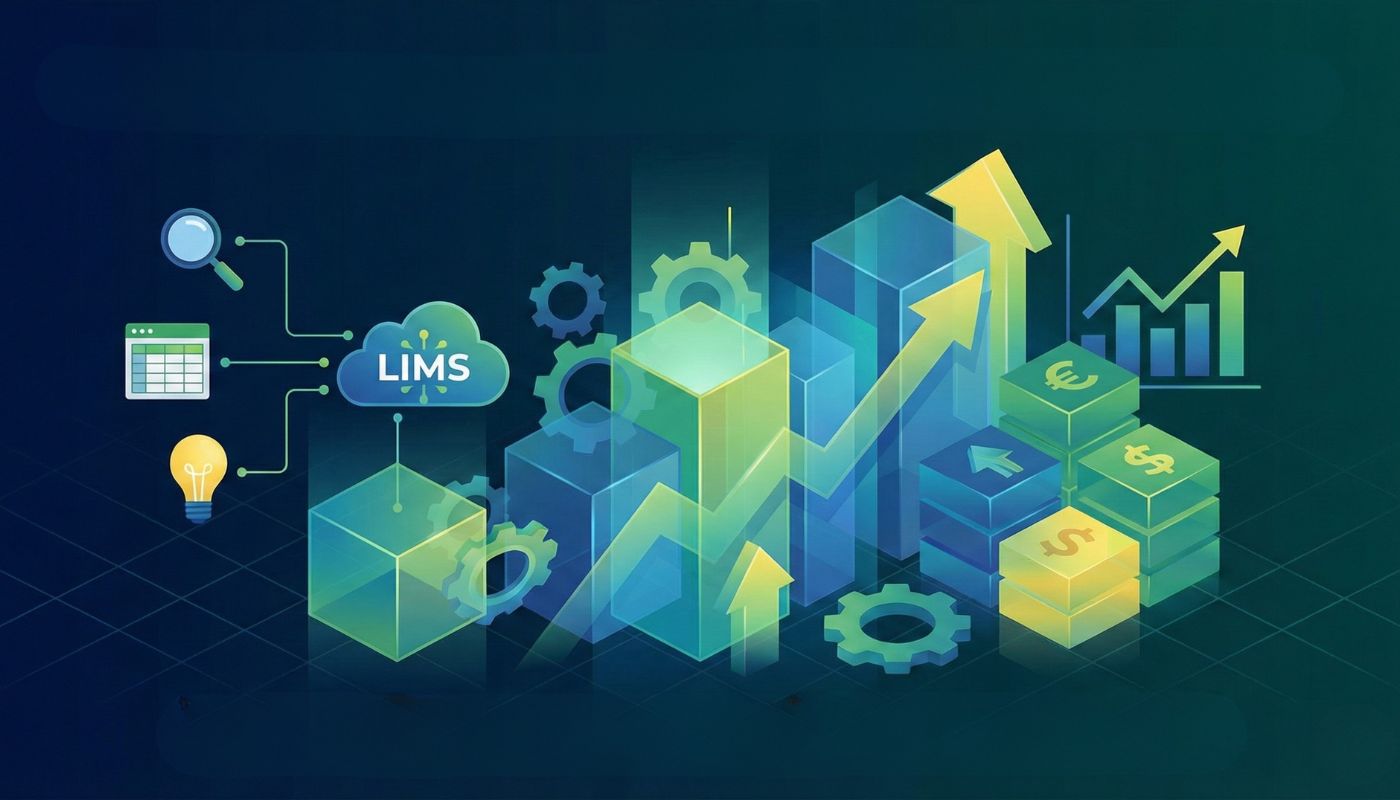
A LIMS is one of the most significant technological investments a lab makes. Getting executive buy-in requires more than just listing the software features—it requires a quantified, strategic business case. The process often starts with a single, daunting question: How can we possibly justify this enormous cost?
Many business cases fail because they focus narrowly on immediate lab efficiency, ignoring the broader strategic and financial impacts. They speak only to the lab manager (more samples, less manual time) and not to the CFO (risk mitigation, total cost of ownership) or the CEO (market competitiveness, scalability).
A winning LIMS proposal reframes the system as a foundational investment in data integrity and maturity, regulatory risk avoidance, and scalable growth, proving that optimizing for value (the total cost of ownership or TCO) always outweighs optimizing for low initial cost. This blog post will show you how and why CSols helps labs like yours justify the cost of a dedicated LIMS consultancy when implementing a new LIMS.
Flipping the Script, From Cost to Investment
Of course, the hard dollar metrics must be acknowledged as an important part of the LIMS implementation calculus. Efficiency and time savings are the immediate benefits of the project, and they do have a strong influence on the decision. To make the case that these benefits extend outside of the lab, these easy wins should be reframed as providing your lab staff with more time to invest in research and innovation. For example, standardized, automated workflows allow the lab to process more samples faster. Efficiencies and time savings are the outcomes that keep your product pipeline going, potentially resulting in new revenue streams or market segments.
A LIMS implementation will automate routine tasks through instrument interfacing, automated calculations, and streamlined internal reporting. Faster access to results allows for better decision making. Automation enabled by a LIMS gives lab managers the ability to quantify the hours saved on manual data entry, transcription, and searching for samples/data.
Standardizing operations enforces consistent testing procedures and calculations across the lab or multiple sites. This reduces variability in results and processes and makes regulatory compliance much easier to achieve. Increased regulatory compliance, in turn, is an investment in data integrity—which can itself be a step on the path to findable, attributable, interoperable, and reusable (FAIR) data and increased access to artificial intelligence (AI) and machine learning (ML) abilities.

Why Cheaper Isn’t Better (Total Cost of Ownership)
The initial price tag of a LIMS is a fraction of its TCO. A cheap, poorly selected, or highly customized budget LIMS creates significant long-term liability, turning a seemingly low upfront expenditure into years of escalating costs. It’s also necessary to consider the costs of infrastructure and environmental impacts.
The Hidden Costs of Cheap
If you choose a LIMS that is inexpensive but that does not fit your business processes, you will continue to pay for things you haven’t budgeted for. These costs include customization, support and maintenance, and incompatibility.
- Cost of Customization: Low-cost, inflexible systems require excessive custom coding for specific workflows, leading to higher implementation costs, major future upgrade headaches, associated vendor/consultant fees, increased system fragility, and maintenance complexity.
- Cost of Support and Maintenance: Budget systems often lack robust vendor support, pushing the burden (and cost) onto internal IT resources, often without the necessary domain expertise. If you need to hire outside help to fix issues, those resources will require time on your dollar to figure out what customizations have been made and how those changes affect functionality.
- Cost of Incompatibility: Choosing a system that cannot scale or integrate with new instruments can force a costly, premature replacement (a rip and replace scenario). Nobody wants to have to start over, but sometimes that is the only way.
Each of these unanticipated costs creates additional headaches around data integrity, regulatory compliance (if applicable), and additional software fixes that may be required to stick bandages on your poorly chosen system until you decide to pull the plug and start over.
The Value of Quality (The ROI Justification)
In contrast, a robust, configurable LIMS costs more upfront but drastically reduces the TCO by simplifying upgrades, minimizing custom code dependency, and providing superior, vendor-backed support. This increases the return on investment (ROI) for a more expensive product. Selecting the right product to begin with is the smartest approach during a LIMS implementation and is why the selection criteria carry such weight throughout the process.
Strategic Drivers (High-Value LIMS Justifications)
Convincing the high-level decision makers of the wisdom in shelling out big bucks for software is easier when you can speak in terms they will understand. Increased throughput in the lab may not mean much to the decision makers. Speaking to them about risk avoidance, data centralization, staff retention, and future proofing is far more likely to sway their opinions.
Regulatory Compliance and Audit Readiness
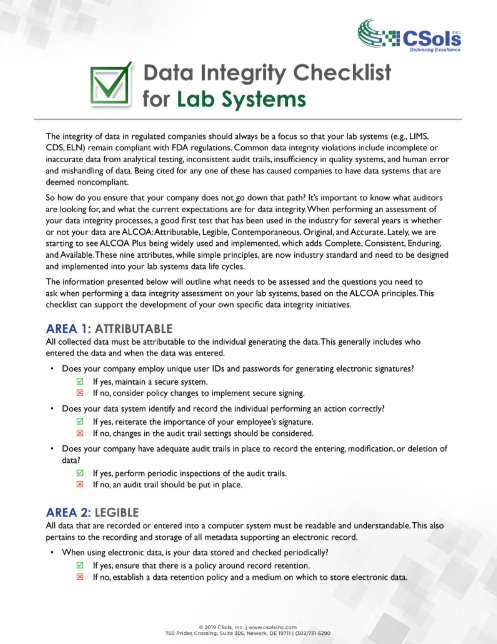
A key to reducing risk is enhanced compliance. A compliant LIMS, whether you work in a regulated industry or not, is an essential insurance policy against catastrophic financial loss. The benefit of data integrity enforcement alone (the assurance that data is attributable, legible, contemporaneous, original, and accurate—plus complete, consistent, enduring, and available (ALCOA+)—can pay for a LIMS implementation over its data lifecycle. User access control and complete audit trails create automated, immutable logs of every action, ensuring 21 CFR Part 11, GxP, and ISO adherence.
A useful exercise can be to quantify the cost of noncompliance (e.g., potential FDA fines, halted production, or lost contracts). Avoiding this cost, which often dwarfs the system price, is a huge and often overlooked advantage.

Data Centralization and Enterprise Value
A modern LIMS can become the central hub for quality control (QC) data, feeding the wider business. In an era where increased data access produces better AI models, this advantage also becomes an important selling point.
A LIMS is capable of seamless data exchange with Enterprise Resource Planning (ERP) systems like SAP, a Manufacturing Execution System (MES), or a Quality Management System (QMS) or any combination of these. Making these integrations eliminates data silos within the lab and across business units.
When your data flows easily throughout the organization, it provides real-time, reliable data to production planning, QA/QC, and finance teams. This produces faster, more accurate batch release decisions and enables supply chain optimization. Better data reaches all corners of the organization quickly.
Staff Retention and Engagement
Skilled labor turnover is another financial cost that a LIMS can help address. Eliminating manual, tedious tasks (data entry, paper archiving) allows highly skilled scientists to focus on high-value scientific work and innovation. Freeing up their time in this way helps to address potential burnout. Modern, well-designed laboratory informatics systems are an amenity that helps attract and retain top talent in a competitive market, reducing recruitment and training costs.
Scalability and Future-proofing
A modern LIMS acts as an enabler for future growth, allowing the organization to onboard new product lines, double sample volume, or introduce new methodologies (like advanced therapies) without needing to overhaul the entire system. The ability to quickly configure and validate new tests and workflows in LIMS gives the lab a competitive edge in rapidly changing markets. These are levers that the C-suite decision makers will pay attention to.
Structure Your Case for Executive Buy-in
To drive your arguments home, demonstrate how improvements that a LIMS provides will directly impact executive metrics. You can model the ROI for individual stakeholders:
- CFO: Focus on quantifiable ROI, payback period, and TCO reduction over five years. (Key metric: Net Present Value of the investment.)
- CEO/VP: Focus on strategic growth, operational resilience, and competitive advantages. Faster turnaround times (TAT) mean increased market share. (Key metric: Business continuity.)
- QA/Compliance: Focus purely on risk mitigation and audit readiness. (Key metric: Reduction in compliance failure rates.)
Concurrently, you can quantify the status quo. Use hard numbers to show the cost of doing nothing. This is the emotional lever: define the annual cost of rework, the estimated cost of a single major data integrity failure, or the lost revenue from slow TAT.
Yes, preparing this information will require some research. Taking the time to put this information together demonstrates your investment in the process and will carry weight with the decision makers.
LIMS as a Strategic Asset
When looking at proposals for a LIMS implementation, focus on the three core benefits: efficiency, TCO value, and risk mitigation. You are not just buying software; you are investing in a validated solution to problems that undoubtedly exist across your organization.
Build a coalition of the willing to invest in LIMS utopia with you. Partner with experts (like CSols) who understand the TCO, compliance, and strategic needs to deliver a business case that gets approved the first time.
Have you been burned by a low-bid project? It happens. The best problem solvers don’t always do things perfectly; they just learn from their mistakes (and those of others) to come up with better solutions in the future.



.jpg)
.png)
.png)

Comments