Is Your Lab Actually Ready for AI? The 5-Pillar Data Assessment

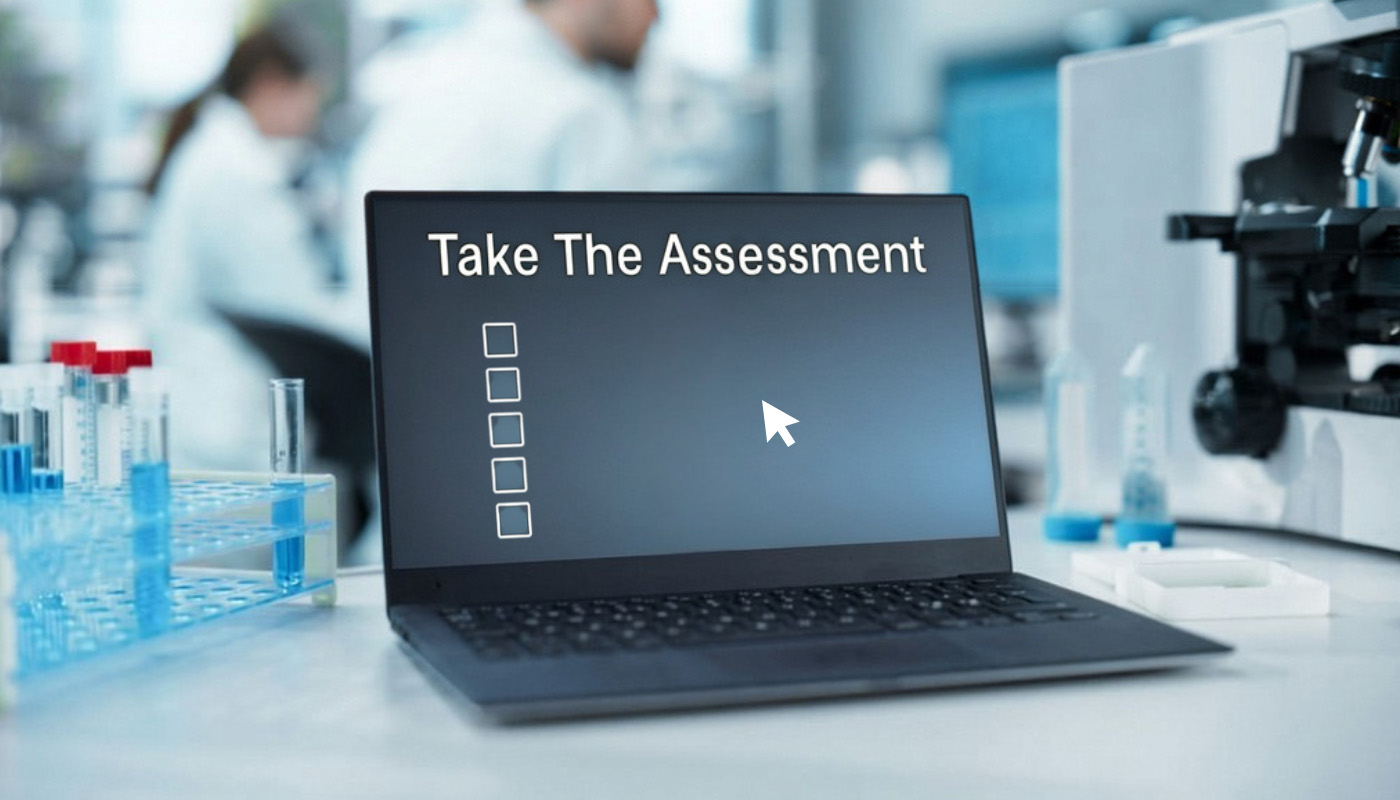
Is your lab actually ready for AI? Stop guessing. Benchmark your data infrastructure against our 5-pillar framework with this quick assessment.
July 7, 2026
Blog: Is Your Lab Actually Ready for AI? The 5-Pillar Data Assessment
TL;DR: This blog post introduces a five-pillar framework—spanning data accessibility, metadata standardization, system interoperability, formal governance, and reusability—to evaluate if a laboratory's data infrastructure is clean, harmonized, and FAIR compliant. It promotes an interactive AI-Ready Lab Data Assessment designed to benchmark ecosystems and prevent model failure caused by unstructured data silos.‍

AI is the most talked-about frontier in laboratory science today. From accelerating drug discovery to automating complex data analysis, the promises are massive. Yet, behind the scenes, a frustrating reality persists: most AI projects in the lab fail.

They don’t fail because the algorithms are weak. They fail because of a simple, foundational law of computing: Garbage In, Garbage Out.

The reality is that messy data within your informatics ecosystem means most labs simply aren’t ready for artificial intelligence. If your data is trapped in silos, unstructured, or inconsistent, your AI models will starve. AI requires a steady diet of clean, contextualized, and harmonized data to deliver on its promise.

To help laboratories understand where they truly stand, we have developed the AI Data Readiness Assessment. Built around a comprehensive 5-pillar framework, this assessment benchmarks your current infrastructure and maps out exactly what you need to bridge the gap between raw data and AI excellence.

Find Out Where Your Lab Stands

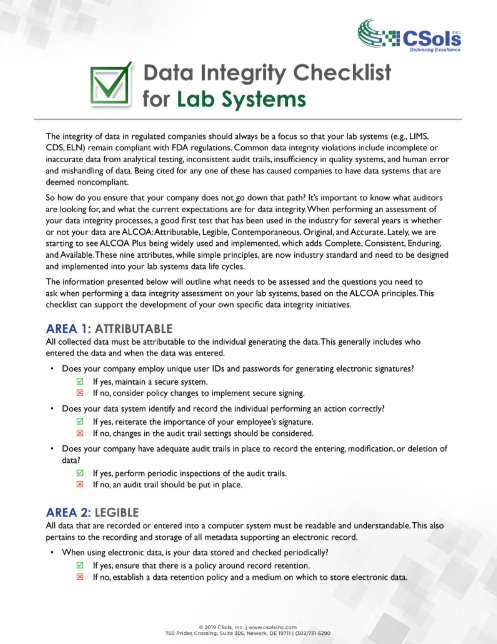
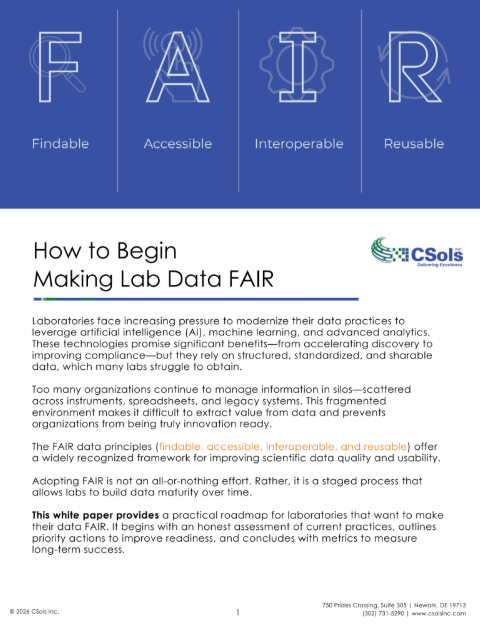
Are you truly ready to deploy AI, or are you at risk of feeding your models data that isn’t Findable, Accessible, Interoperable, and Reusable (FAIR)?

Don't guess—benchmark your laboratory today. Answer 15 questions that evaluate your infrastructure against the 5 pillars and receive actionable insights on how to prepare your ecosystem for the future of science.

The 5-Pillar Framework

Each of the five pillars has three questions that clarify whether your data isn’t ready for AI, in a transitional state, or AI optimized.

1. Data Silos and Accessibility

AI thrives on holistic datasets, but laboratory data is notoriously fragmented. We look at whether your instruments are fully integrated into a centralized network, or if critical data remains trapped on local instrument PCs, isolated hard drives, and USB sticks. If your data isn't accessible, your AI can't learn from it.

2. Metadata and Documentation

Context is everything. Without rich metadata, data is just noise to an AI model. We assess whether your naming conventions, experimental parameters, and sample histories are standardized lab-wide, or if they are left to individual scientist discretion. Consistent documentation ensures that data generated today can be accurately interpreted by an algorithm tomorrow.

3. System Interoperability

A modern lab uses a multitude of software solutions, but do they talk to each other? We evaluate whether your LIMS, ELN, and CDS platforms communicate natively, or if your team is stuck doing manual exports and data transcription. True AI readiness requires seamless automated data flows across your entire digital ecosystem.

4. Governance and Stewardship

Data quality doesn't happen by accident; it requires ownership. This pillar looks at your organizational framework. Is there a formal data steward overseeing quality, compliance, and lifecycle protocols right at the point of data origin? Strong governance guarantees that the data entering your ecosystem is trustworthy from day one.

5. Reusability and Compliance

To train effective models over time, data must endure. Is your data locked in proprietary vendor dialects that require specific, legacy software to read? Or is it stored in open, future-proof formats with a validated audit trail? Ensuring long-term reusability and regulatory compliance is the final piece of the AI-readiness puzzle.

The Data Bedrock for an AI-ready Lab 

Once you’ve taken the assessment, you’ll receive an email explaining your score, your core priorities based on that score, and the next steps you should take in your journey to AI readiness. 

Your lab’s data is valuable. CSols will work with you to ensure that it’s FAIR and AI ready so that you can mine it for insights to realize its ROI. 

As always, we’re here to help.


What don’t you know yet about your lab data’s readiness for AI?

Comments

Leave a reply. Your email address will not be published. Required fields are marked *
This site uses Akismet to reduce spam. Learn how your comment data is processed.
Thank you! Your submission has been received!
Oops! Something went wrong while submitting the form.

Is Your Lab Actually Ready for AI? The 5-Pillar Data Assessment

Is your lab actually ready for AI? Stop guessing. Benchmark your data infrastructure against our 5-pillar framework with this quick assessment.

Is your lab actually ready for AI? Stop guessing. Benchmark your data infrastructure against our 5-pillar framework with this quick assessment.

TL;DR: This blog post introduces a five-pillar framework—spanning data accessibility, metadata standardization, system interoperability, formal governance, and reusability—to evaluate if a laboratory's data infrastructure is clean, harmonized, and FAIR compliant. It promotes an interactive AI-Ready Lab Data Assessment designed to benchmark ecosystems and prevent model failure caused by unstructured data silos.‍

AI is the most talked-about frontier in laboratory science today. From accelerating drug discovery to automating complex data analysis, the promises are massive. Yet, behind the scenes, a frustrating reality persists: most AI projects in the lab fail.

They don’t fail because the algorithms are weak. They fail because of a simple, foundational law of computing: Garbage In, Garbage Out.

The reality is that messy data within your informatics ecosystem means most labs simply aren’t ready for artificial intelligence. If your data is trapped in silos, unstructured, or inconsistent, your AI models will starve. AI requires a steady diet of clean, contextualized, and harmonized data to deliver on its promise.

To help laboratories understand where they truly stand, we have developed the AI Data Readiness Assessment. Built around a comprehensive 5-pillar framework, this assessment benchmarks your current infrastructure and maps out exactly what you need to bridge the gap between raw data and AI excellence.

Find Out Where Your Lab Stands

Are you truly ready to deploy AI, or are you at risk of feeding your models data that isn’t Findable, Accessible, Interoperable, and Reusable (FAIR)?

Don't guess—benchmark your laboratory today. Answer 15 questions that evaluate your infrastructure against the 5 pillars and receive actionable insights on how to prepare your ecosystem for the future of science.

The 5-Pillar Framework

Each of the five pillars has three questions that clarify whether your data isn’t ready for AI, in a transitional state, or AI optimized.

1. Data Silos and Accessibility

AI thrives on holistic datasets, but laboratory data is notoriously fragmented. We look at whether your instruments are fully integrated into a centralized network, or if critical data remains trapped on local instrument PCs, isolated hard drives, and USB sticks. If your data isn't accessible, your AI can't learn from it.

2. Metadata and Documentation

Context is everything. Without rich metadata, data is just noise to an AI model. We assess whether your naming conventions, experimental parameters, and sample histories are standardized lab-wide, or if they are left to individual scientist discretion. Consistent documentation ensures that data generated today can be accurately interpreted by an algorithm tomorrow.

3. System Interoperability

A modern lab uses a multitude of software solutions, but do they talk to each other? We evaluate whether your LIMS, ELN, and CDS platforms communicate natively, or if your team is stuck doing manual exports and data transcription. True AI readiness requires seamless automated data flows across your entire digital ecosystem.

4. Governance and Stewardship

Data quality doesn't happen by accident; it requires ownership. This pillar looks at your organizational framework. Is there a formal data steward overseeing quality, compliance, and lifecycle protocols right at the point of data origin? Strong governance guarantees that the data entering your ecosystem is trustworthy from day one.

5. Reusability and Compliance

To train effective models over time, data must endure. Is your data locked in proprietary vendor dialects that require specific, legacy software to read? Or is it stored in open, future-proof formats with a validated audit trail? Ensuring long-term reusability and regulatory compliance is the final piece of the AI-readiness puzzle.

The Data Bedrock for an AI-ready Lab 

Once you’ve taken the assessment, you’ll receive an email explaining your score, your core priorities based on that score, and the next steps you should take in your journey to AI readiness. 

Your lab’s data is valuable. CSols will work with you to ensure that it’s FAIR and AI ready so that you can mine it for insights to realize its ROI. 

As always, we’re here to help.


What don’t you know yet about your lab data’s readiness for AI?
Start Date
End Date
Event Location
Webinar

Maya Test

Webinar SAP QM or LIMS, which is right for your lab?

White Paper

This is the CTA title

This is a placeholder heading

5 Things You Can Improve During Instrument Qualifications

eBooks

This is an e-book title

Case Study

This is a case study title

Video

This is a video title

Resource

Heading