


When potential LIMS buyers search for something like "LabWare vs. Sapio vs. Uncountable" or “STARLIMS vs. Benchling vs. LabLynx,” they are evaluating the top options across software archetypes. These archetypes are enterprise heavyweights, modern configurable SaaS platforms, and specialized innovators. People in this situation (maybe like you?) are trying to make sense of the vastly different LIMS options on the market.
Comparisons like this can be confusing. Archetypes represent systems that were built for fundamentally different operational environments (QA/QC vs. Agile biotech vs. materials R&D). It’s very common for organizations with very little experience in laboratory informatics to begin their search this way.
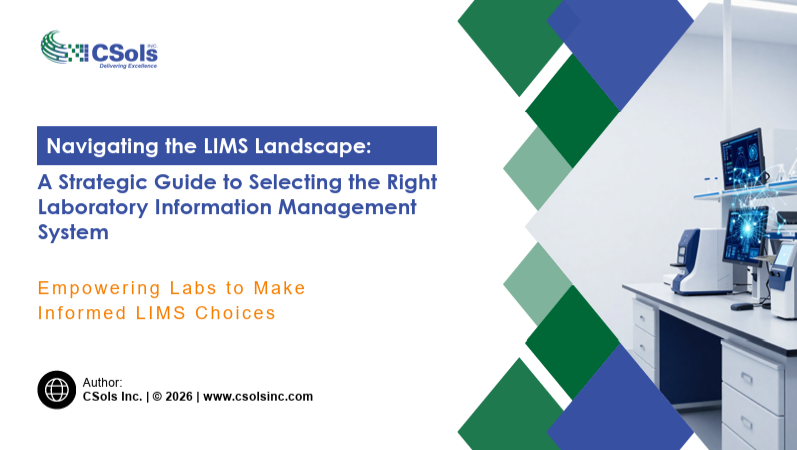
{{cta:the-lims-comparison-guide-navigating-the-lims-landscape}}
It’s important to understand that there is no single best LIMS. There is only the system that best fits your specific operational requirements and stakeholder needs. That’s why the requirements definition process carries so much weight. An industry rule of thumb is that up to 70% of LIMS implementation delays result from insufficient requirements.
The appropriate LIMS for your organization will be found within one of those archetypes, based on your lab’s requirements. Your first decision must be which archetype best fits the workflows and processes of your lab as defined by the stakeholders’ requirements.
Gathering those requirements from the right stakeholders is absolutely critical to the success of your selection process. We have seen far too many LIMS implementations reach the development stage before someone says “Oh, we need the system to do [this] or we won’t be able to release our product for shipping.” And [this] was not in the requirements the vendor and developers were given at the outset.
{{cta:strategies-and-methods-for-gathering-your-requirements}}
The 3 LIMS Archetypes: How They Stack Up
Here is a brief overview of the strengths and best-fit environments for the LIMS archetypes. Of course, your lab may choose any of these archetypes based on your unique workflows and processes.
The Enterprise Heavyweights
Industry stalwarts such as LabWare, LabVantage, SampleManager, and STARLIMS have long histories for a reason. These systems can handle high-throughput routine testing, offer deep regulatory/GxP compliance and robust validation documentation, and support multi-site global scales. Large pharma manufacturing operations, high-volume contract quality control labs, and other highly regulated environments will often find their best fit within this group.
The Modern Configurable SaaS Platforms
Configurable SaaS platforms like Benchling, Matrix Gemini, QBench, and Sapio are often the first choice for fast-growing biotech companies. These organizations perform data-intensive analyses like next-generation sequencing (NGS), genomics, or clinical diagnostics. Products within this archetype provide a unified LIMS + ELN codebase, rapid user interface configuration (no code), native AI features, and high agility to adapt as workflows change or are added.
The Specialized Innovators
The third archetype typically has a more tightly defined focus. Examples include L7 Informatic, LabGuru, LabLynx, and Uncountable. These products stand out in their abilities for managing formulations, multi-variable experiments, structured data models for machine learning, and AI optimization. Labs in materials science, specialty chemicals, or advanced R&D may want to start here.
Comparing LIMS Archetypes Across 6 Core Technical Vectors
There are six key technical decision points that serve as the basis for requirements definition. These are additional differentiators for the three archetypes and are presented in more detail in our LIMS comparison ebook.
Configuration vs. Customization
This vector looks at the quantity of hard-coded scripting vs. drag-and-drop/no-code user interface changes. If you can configure the LIMS to work within your lab’s workflows without having to make custom coding modifications, you automatically reduce the complexity of the LIMS.
Architecture and Deployment
Considering the architecture of the LIMS helps to satisfy your finance team. They will want to know how the various options affect expenses. You must also weigh multi-tenant SaaS flexibility versus on-premises/dedicated cloud data sovereignty.
Regulatory and Data Integrity
Speaking of data sovereignty, there is a tradeoff between turnkey audit trail speed and R&D fluidity. It stands to reason that a LIMS with fewer bells and whistles is easier to validate and maintain in compliance with regulatory standards. However, if your organization anticipates growth in terms of users, additional tests, or increased product lines, you may want a more flexible LIMS that could create challenges in this area.
User Experience and Scientist Adoption
Your bench scientists value intuitiveness in the user interface. Ensuring that information is easy to add to, and find in, the system helps prevent shadow Excel workarounds. Ensuring that data entry is as close to the path of least resistance for the people who use it every day will create value and build efficiency.
Integration Capabilities (APIs)
Here you should consider the full laboratory data ecosystem. This vector documents how easy it is to make connections to the LIMS with instruments, other data systems, and enterprise resource planning software (SAP). Don’t just think about your current setup either; take a future-forward approach and ensure that the LIMS keeps your options open for solutions that haven’t been developed yet.
AI Readiness and Data Structure
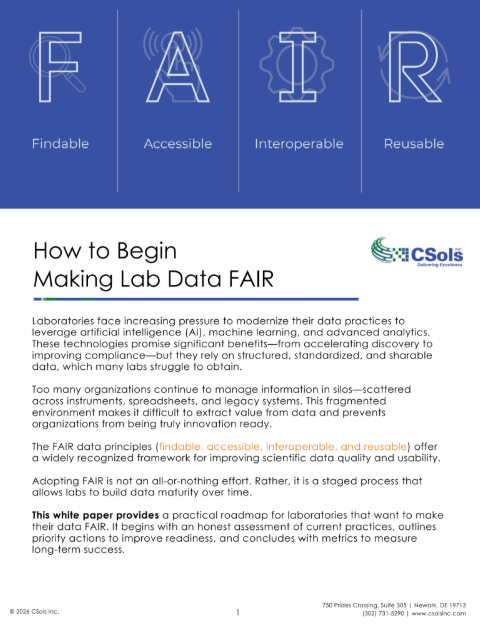
This is another reason to keep the data ecosystem in mind. It’s important to have, or be capable of receiving, data in open machine-readable formats like JSON or the Allotrope Simple Model. This fosters FAIR data and helps to eliminate rigid proprietary silos.
{{cta:how-to-begin-making-lab-data-fair}}
Why Software Reviews (G2/Capterra) Don't Tell the Whole Story
Savvy consumers are turning more often to peer reviews to inform their decisions. If you choose to visit a site like G2 or Capterra as part of your information-gathering process, keep the following caveats in mind.
Review platforms have limitations. The surface-level snapshots they provide (e.g., Capterra’s feature checklists or G2’s immediate ease-of-use scores) do not assess the potential for a deep architectural fit.
Recognize that a 5-star review from an R&D chemist using an agile ELN/LIMS platform doesn't mean that same software can survive a 10,000-sample/day GxP manufacturing audit. YMMV, as they say.
The Secret to Selection: The Multi-stakeholder Matrix
As mentioned at the beginning of this post, the requirements gathering process has tremendous importance for the success of a LIMS selection. A structured selection process that takes the time to understand the needs of all your stakeholders will ensure that your chosen LIMS can meet the needs of your lab now and well into the future.
Speaking with many stakeholder groups will require balancing conflicting priorities. Different teams understandably look for different LIMS capabilities when they evaluate representative members of each archetype.
- Bench scientists demand low-click user experiences.
- IT demands RESTful APIs and a clean data architecture.
- Finance balances OpEx subscription costs against CapEx deployments.
- QA officers demand unalterable audit trails.
The requirements you develop with your stakeholders and use to narrow your choices will evolve as you move through the vendor demonstrations. Weighing these requirements appropriately at the beginning (e.g., using the MoSCoW method) across all stakeholder groups is critical before issuing an RFP.
Using LIMS Archetypes to Make an Informed Choice
A high-level view is just the starting point. Choosing between LabWare, Sapio, Uncountable, or any other platform isn't about finding the top-rated software—it's about rigorously mapping your lab's workflow requirements. This work is often much easier to do well with an expert laboratory informatics consulting firm like CSols.
{{cta:the-lims-comparison-guide-navigating-the-lims-landscape}}
There’s much more detail about requirements gathering and scoring in CSols’ LIMS comparison guide. Because choosing a LIMS is such a high-stakes and unfamiliar process, the guide includes comprehensive vendor evaluation matrices with the information you need to build weighted scoring rubrics and stakeholder alignment frameworks. This will help you understand the complexity of what might, at first, appear to be a relatively simple process.
Do you feel more confident about tackling a LIMS selection project now? If not, we’re happy to help.
Frequently Asked Questions
A thorough requirements gathering phase typically takes 1 to 3 months, depending on your laboratory's operational complexity and regulatory scope. Success requires engaging a cross-functional team of bench scientists, IT, QA/Regulatory officers, and a variety of stakeholders (leadership/management, finance, warehousing, etc.) to ensure all operational and compliance needs are captured.
"AI-ready" data means your LIMS captures and stores information using open, machine-readable formats, such as JSON or the Allotrope Simple Model, following FAIR (Findable, Accessible, Interoperable, Reusable) data principles. This allows downstream machine learning algorithms and predictive models to ingest lab data seamlessly without requiring extensive manual cleanup.
The most effective approach is issuing a structured RFP paired with scripted vendor demonstrations, evaluated using a weighted scoring matrix built from your prioritized requirements. CSols can guide this process to help you facilitate a fair evaluation and map vendor capabilities directly to your lab's specific needs.



.jpg)
.png)
.png)

Comments