


NEWARK, DE, UNITED STATES, Febuary 25, 2026 /EINPresswire.com/ -- CSols Inc., Digital transformation in the laboratory has shifted from a future goal to an immediate, accelerating reality. A CSols-commissioned, late 2025 survey of 156 laboratory informatics leaders across the chemical, petrochemical, and energy sectors revealed that organizations are fundamentally rethinking their platforms as the backbone for scientific agility and enterprise strategy. Many are balancing short-term geopolitical disruptions with long-term goals for scalability and AI-enabled growth.
The laboratory informatics landscape is evolving rapidly, driven by ecosystem shifts and increasing compliance pressures. The next two years will be a period of major structural change in laboratory informatics implementation from static record keeping to active strategic data capabilities. Lab leaders are responding by moving away from the view of informatics as simple compliance safeguards and embracing it as an essential strategic tools with measurable ROI that contribute to long-term success.
The Convergence Mandate
The shift from reactive compliance to proactive growth strategies is characterized by the collapse of traditional data silos, a move toward data-centric architectures, and the integration of external geopolitical and economic factors directly into lab operations.
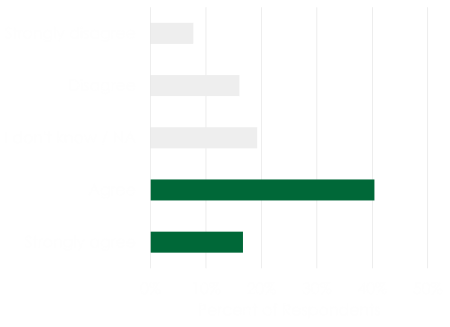
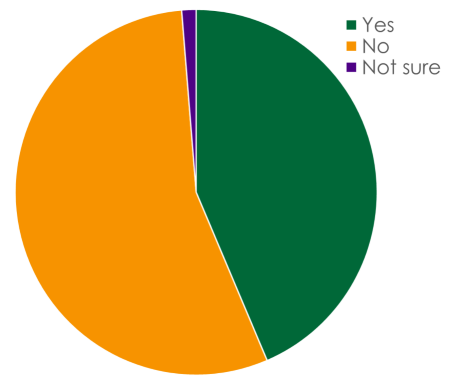
2026 will be a pivotal year, with 57% of chemical, petrochemical, and energy leaders planning to consolidate LIMS, ELN, and SDMS into streamlined platforms for greater efficiency and simplify governance. This continues organizational moves toward a unified data fabric, where historically separate systems function as a single interoperable ecosystem, often facilitated by an ontology. Consolidating raw, unprocessed data from heterogeneous sources within a defined, structural format is essential for training machine learning models.
Fig. 1. Do you agree that 2026 will be a year of software consolidation between LIMS, ELN, and SDMS systems?
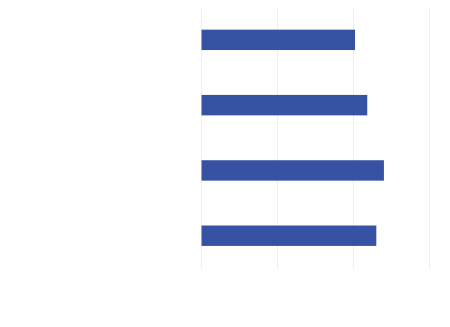
For the first time, AI readiness and data lake projects (77%) have surpassed compliance pressure (65%) as the top motivator for system changes. For 83% of lab leaders, AI readiness is no longer a differentiator but a mandatory capability for any modern platform.
Fig. 2. Which drivers are motivating you to change or enhance your informatics software?
Legacy system limitations are no longer tolerable; 81% of respondents report that vendor technology gaps triggered system upgrades in 2025.
Labs Respond to Economic Pressures with Digital Muscle
Geopolitics, federal policies, and economic concerns are now direct dictators of internal innovation timelines, forcing chemical, petrochemical, and energy labs to build operational resilience. This increasingly involves AI adoption to gain efficiency, increase data integrity, and spot trends in LIMS and ELN data before they become issues.
Organizations are structurally retooling for AI by implementing data lakes to store raw, unprocessed data from heterogeneous sources, which is essential for effective deployment of machine learning models.
Supply chain disruptions from tariffs and research and development pipeline delays from immigration changes have directly delayed 31% of critical technology projects.
Fig. 3. Have tariffs or other US governmental decisions delayed key lab technology projects in the past 6 months?

Economic uncertainties have forced 78% of organizations to reallocate budgets to manage increased material costs and inventory stockpiling.
Fig. 4. In what ways have tariffs and regulatory acts affected your material sourcing?
Fighting the Monolith and Escaping Vendor Lock-In
As chemical, petrochemical, and energy laboratories look toward 2026, a significant structural hurdle has emerged: the tech-stack monolith. Currently, 64% of laboratories rely on a single vendor for their primary informatics (LIMS and ELN) footprint. Although this was once done to simplify IT, 72% of leaders now admit that this dependence actively reduces their organization’s adaptability in the face of market shifts.
Fig. 5. If you use a single-vendor LIMS-ELN-SDMS stack, do you experience any difficulty in responding to emerging needs?

This reliance hampers organizational agility. When a single vendor’s development roadmap lags, the laboratory’s innovation cycle stalls. This frustration is reaching a tipping point; 37% of managers indicate they are likely to switch vendors during their next upgrade cycle—a clear signal of impending market churn.
The trend is away from monolithic software stacks and toward flexible, composable architectures. In fact, vendor inflexibility has become a major dealbreaker. Labs are increasingly adopting modular low-code/no-code scientific data platforms that allow them to assemble and reconfigure functional modules as research needs or global economic conditions change.
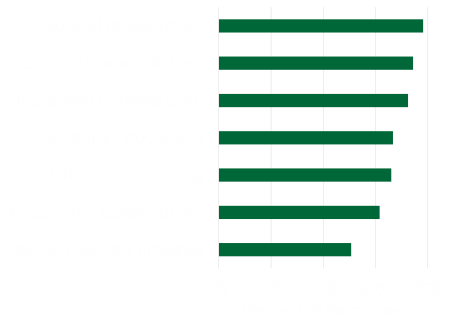
However, the criteria for choosing a new partner are shifting beyond the simple price tag. Modern buyers are prioritizing the wider ecosystem and the ability to scale rapidly. Cloud-hosted platforms are now the preferred choice for scalability, with 77% of respondents ranking cloud capability as a top selection criterion.
Fig. 6. Which features influence your vendor selection besides cost?
Support quality is prioritized by 76% of respondents. This is not merely a preference; 65% of IT and Lab Managers cite poor support quality as the primary reason they would leave their current LIMS vendor.
In today’s laboratory informatics setting, the vendor is no longer just a supplier—they are a critical component of the lab's infrastructure. If that component is too rigid to pivot with the lab’s rapidly evolving needs, it becomes a strategic liability. To thrive, labs must escape vendor lock to unlock value. This happens fast when labs and vendors embrace modularity and ecosystem-wide interoperability.
Strategic Insights: Roadmaps & ROI
Success in informatics is increasingly tied to governance and formal planning rather than just the technology itself. Survey results suggest that more than a third of chemical, petrochemical, and energy project failures are self-inflicted by organizational culture rather than technical software deployment issues.
Governance is just as much about alignment as it is about oversight. Without a strong project leader to arbitrate between the lab users, IT, quality assurance, and management, the LIMS or ELN project loses its mandate and eventually stalls under the weight of conflicting requirements.
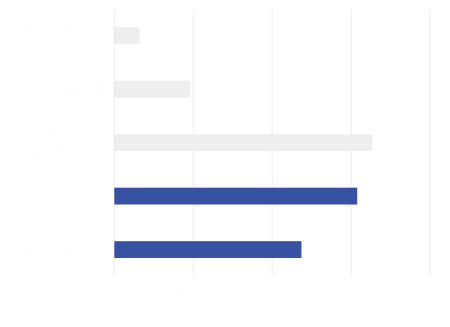
Governance requires visibility. If you cannot measure utilization or throughput via a dashboard, you cannot determine the system's value. However, only 44% of labs perform post-launch utilization reviews. This is a governance failure. Without a Plan-Do-Check-Act cycle, the system becomes shelfware over time, even if it was successful at launch. Formal utilization reviews can identify underused features that could drive further value.
Fig. 7. Have you ever conducted a post-launch LIMS utilization review?
Poor change management remains a hurdle, with 35% of respondents citing it as the primary cause for project restarts. For this reason, it may help to think of change management as project insurance. If an organization isn't willing to invest in the social architecture of a project, the financial investment in the software is at risk.
Fig. 8. If you restarted a previously unsuccessful lab informatics system project, was lack of internal change management a main factor?

Formal roadmaps drive better outcomes in terms of staying on budget. A roadmap acts as a stabilizer in a volatile environment. In an industry currently disrupted by tariffs and policy shifts, a formal informatics plan allows a lab to pivot strategically rather than reactively. Those with roadmaps were 54% more likely to stay on budget, proving that slow planning leads to fast execution.
Fig. 9. If you used a formal roadmap and structured implementation process, were you able to stay on budget?
Planning is also a hedge that provides the digital resilience needed to absorb external shocks (like the 31% of labs experiencing technology delays due to trade policies; Fig. 3).
Strategic planning must include the definition of success metrics (key performance indicators or KPIs) before the software is turned on, and those metrics need to be tracked. KPI-driven LIMS dashboards are the fastest way to realize value, with 51% of labs using them to drive measurable returns within six months.
The Role of AI: From Pilot to Mainstream
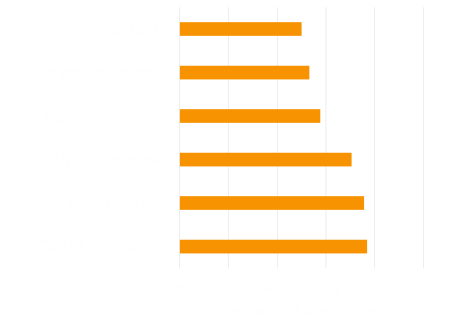
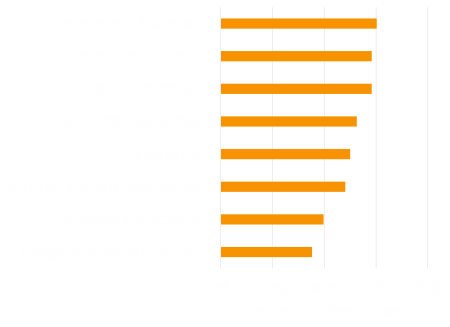
AI readiness is no longer a differentiator; it has become a must-have for any modern data platform. AI is being prioritized for operational efficiency, specifically for instrument downtime alerts (60%), smart dashboards (58%), test prioritization (58%), and anomaly detection (53%).
Fig. 10. Which AI-related use cases are you applying or planning to apply?
The pilot phase for AI is over; 67% of chemical, petrochemical, and energy labs have rolled out AI-augmented informatics functions, and 75% of labs already using AI plan to further expand its scope soon.
Once the excitement of AI wears off, though, the grueling reality of the data infrastructure changes needed to support it sets in. This suggests a readiness paradox—labs want the output of AI without the organizational hygiene of a data lake. However, the transition from unstructured dark data to machine-readable assets is necessary before the full power of AI can be realized.
The People Picture: Utilization and Training
User adoption is the ultimate metric of success, and current utilization levels are higher than in previous years. As systems become more complex, the structural role of chemical, petrochemical, and energy lab staff is shifting from manual testing to data stewardship.
One of the most significant pain points identified is the training-utilization gap. 46% of labs cite insufficient training as the top cause of underutilization. Strategic planning often fails because it focuses on go-live instead of post-live, which is where the training happens. Governance must extend into the steady state of the system.
A successful governance model treats the informatics system as a product that requires ongoing life-cycle management, not a project with an end date. This includes a permanent training budget and a dedicated "system champion" within the lab.
Future lab professionals increasingly need skills in data literacy, digital problem-solving, and cross-disciplinary collaboration rather than just experimental execution. However, university-level informatics programs are becoming increasingly competitive.
Despite high LIMS usage recorded by a significant number of respondents, 46% of organizations identify insufficient training as the leading cause of system underuse. This remains a critical barrier to realizing full value from their digital investments.
Fig. 11. If you are underusing your LIMS, is insufficient training a main reason?
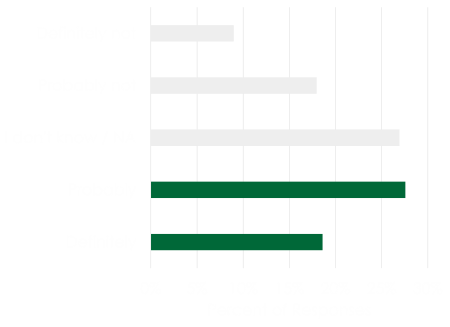
Interestingly, laboratory informatics usage remains statistically robust; roughly half of respondents reported using more than 80% of their system's available functionality. However, this high level of active use does not equate to optimized use. When paired with the fact that 35% of projects still face project restarts due to poor change management (Fig. 8), it becomes clear that labs are working hard within their LIMS and ELN systems, but perhaps not as smartly as they could be if better governance and training were in place.
Summary
The chemical, petrochemical, and energy laboratory landscape is at a strategic crossroads. AI readiness is baked in, and external economic pressures are reshaping digital roadmaps. Labs that treat informatics as an evolving strategic capability—rather than a static tool—will be best positioned to thrive.
To surmount some of the common issues that chemical, petrochemical, and energy laboratory informatics implementations often fall prey to, we suggest building the following organizational tools:
- A cross-functional steering committee that meets monthly.
- A 3–5-year plan that is updated quarterly to reflect market shifts (like new AI capabilities or trade disruptions).
- A mandatory review six months post-launch to bridge the training gap and capture hidden ROI.
With these relatively simple tools you can future-proof your lab informatics, prepare for AI-enabled data mining, and maximize your return on investment.